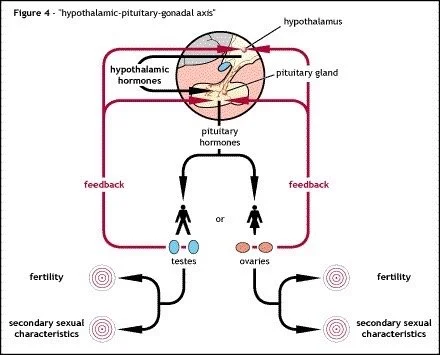
Text explaining Kallmann syndrome as a condition characterized by a lack of sense of smell, in addition to the lack of puberty, differentiating it from other forms of hypogonadotropic hypogonadism.
Text discussing KS / HH preventing puberty from starting or fully completing, and explaining that the condition is normally present from birth but can occur later in life after a normal puberty.
Spectrum of additional symptoms found in Kallmann syndrome alongside delayed or absent puberty.
Text discussing how certain conditions affect males and females differently, and the process of making medical diagnoses by excluding other conditions. The text mentions that sometimes patients are incorrectly labeled as 'late bloomers'.
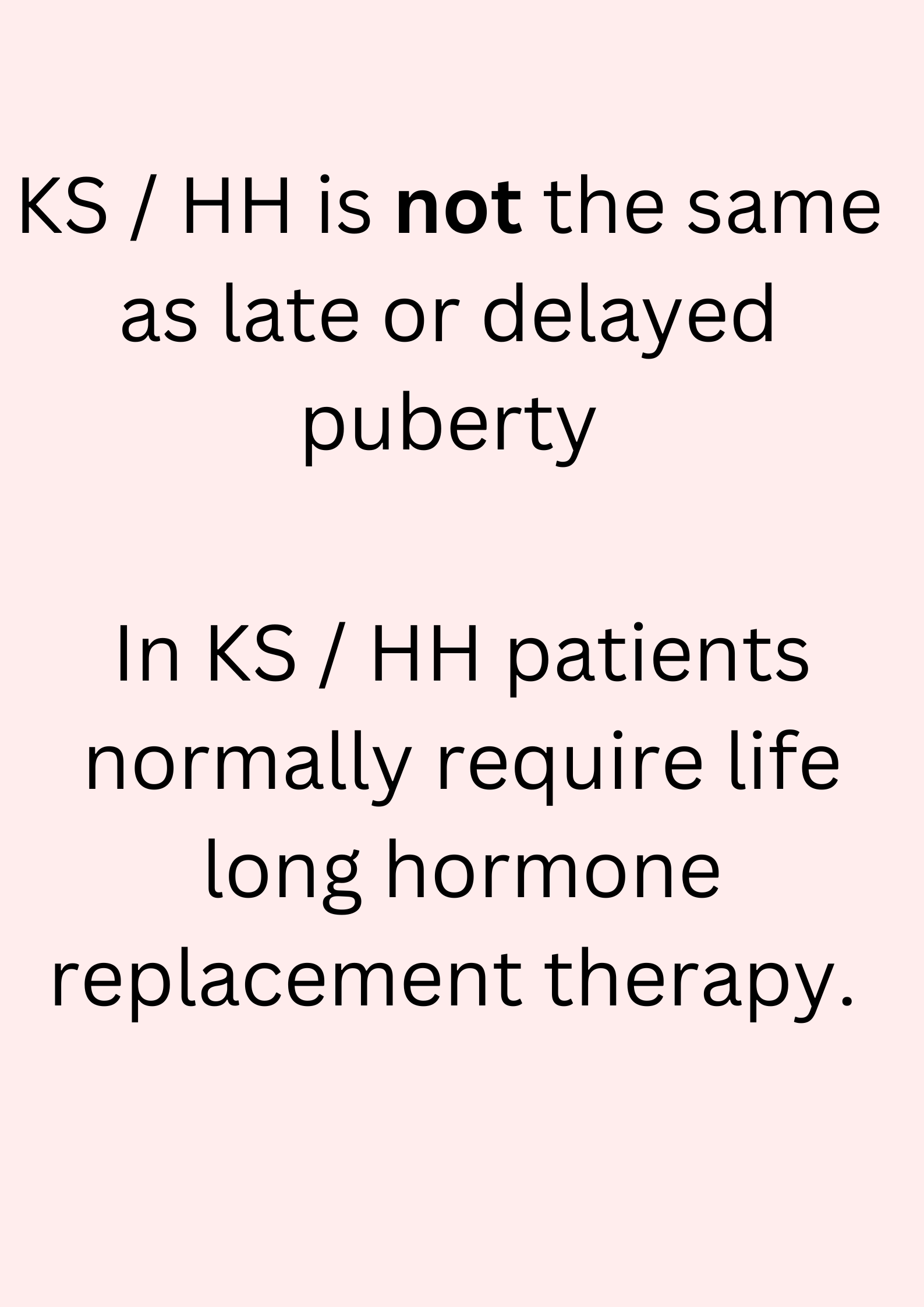
Text stating that KS / HH is not the same as late or delayed puberty and that patients usually require lifelong hormone replacement therapy. Patients with delayed puberty will normally go through normal puberty with treatment.

Photo courtesy of Dr Andrew Dwyer, Boston College, USA.

The main symptom of Kallmann syndrome / CHH is a failure to start or fully complete puberty.

However there are a range of additional symptoms that may or may not be present in any individual case.

KS / CHH can be seen as a broad spectrum condition with each case having different symptoms and different symptoms that occur along side the failure to go through puberty.

Lack of sense of smell is the defining symptom of Kallmann syndrome as it is found in 100% of cases, but is not present in CHH.

Other symptoms may only appear depending on the precise genetic cause of each condition.

Siblings, even twins, with KS / CHH may have different symptoms and severity of symptoms.